|
Why is the notorious P/E ratio useless? Simply because it fails when you need it most.
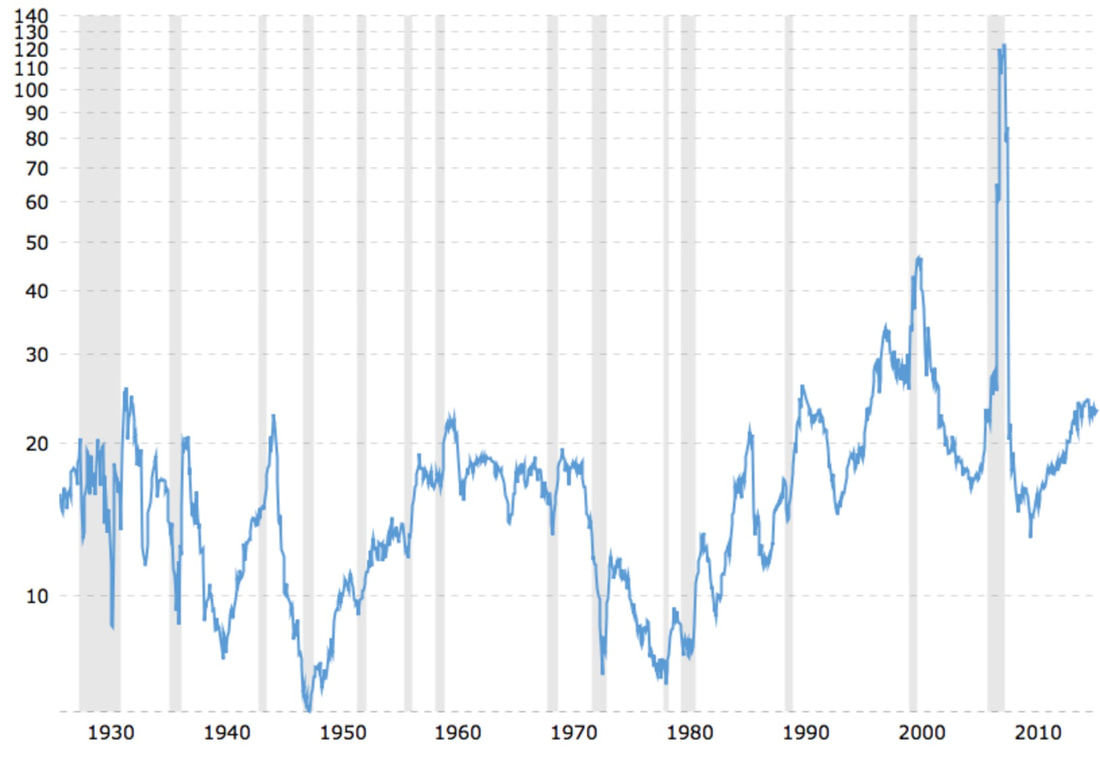
S&P 500 PE Ratio - 90 Year Historical Chart
Think of it:
2 Comments
Is it a good idea to adjust stock market indices to inflation? Well, why not. However, there's a glitch. The most usual inflation measure -- the Consumer Price Index -- is an awkward tool for this purpose. Asset prices should not be conflated with consumer prices. Equities are assets, consumer goods are not. Discounting asset prices with the CPI is methodologically wrong. Do not expect any meaningful results if you combine the CPI inflation with equity prices, corporate earnings et cetera. Is there a better approach? Yes. Using monetary inflation -- or money supply growth -- is the correct way to go. In other words, the question is "how would the stock market index look like if money supply remained constant?" (It's money supply, not consumer prices what matters to investors.) The answer to the above question is as follows -- and it's a surprising chart indeed! 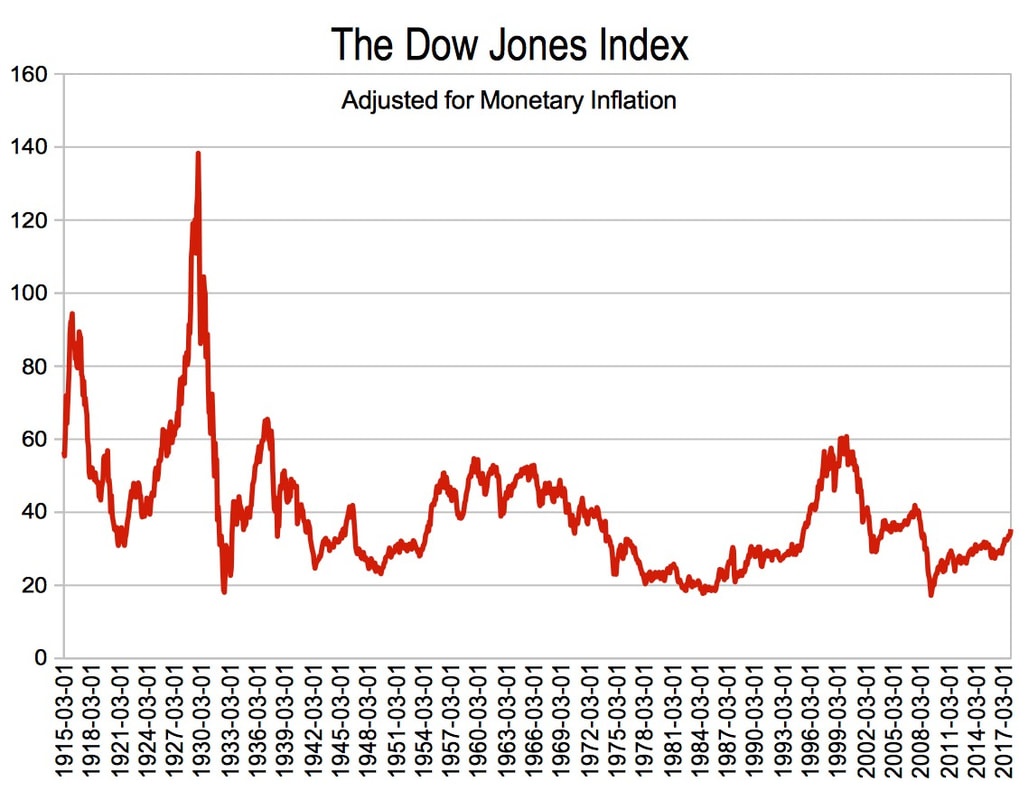 The takeaway of this exercise is, among others:
This is the most comprehensive US stock market index adjusted for inflation. The inflation is defined as the growth of liquid money supply (MZM, Money Zero Maturity aggregate.)
Is the market overpriced or cheap? Make your own conclusion.
|
AuthorPavel Kohout (1967), investor, writer, photographer and application developer (Android, Windows, macOS). Based in London and Prague.
Archives
May 2020
Categories |
 RSS Feed

The Robot Investment Calculator software and its underlying algorithms and know-how is owned and published by Westbourne Technologies Ltd, 25 Westbourne Terrace, London W2 3UN (the Publisher), Company Number 11115458. All rights reserved.
DISCLAIMER: Contents are provided for general information purposes only and do not constitute an offer to sell or a solicitation of an offer to buy any Security in any jurisdiction. The Publisher does not intend to solicit and is not soliciting, any action with respect to any Security.
The contents of this section have not been approved or disapproved by any securities commission or regulatory authority in any jurisdiction. The contents are neither sufficient for, nor intended by the Publisher to be used in connection with, any decision relating to the purchase or sale of any existing or future Securities. The Publisher does not intend to provide financial, investment, tax, legal, or accounting advice. Investors considering the purchase or sale of any Securities should consult with their own independent professional advisors. Past performance is no guarantee of future returns.
DISCLAIMER: Contents are provided for general information purposes only and do not constitute an offer to sell or a solicitation of an offer to buy any Security in any jurisdiction. The Publisher does not intend to solicit and is not soliciting, any action with respect to any Security.
The contents of this section have not been approved or disapproved by any securities commission or regulatory authority in any jurisdiction. The contents are neither sufficient for, nor intended by the Publisher to be used in connection with, any decision relating to the purchase or sale of any existing or future Securities. The Publisher does not intend to provide financial, investment, tax, legal, or accounting advice. Investors considering the purchase or sale of any Securities should consult with their own independent professional advisors. Past performance is no guarantee of future returns.